It’s as if I don’t belong here like an alien or spy / Who’s landed on a strange world with no grasp of how or why.
For me, everything started with poetry, and I date my beginning as a writer to going on an Arvon Foundation Writing Course when I was fourteen. I was lucky to be able to do this, and it was via my school, a boys’ comprehensive in South London called Kemnal Manor. The school had a great English department, and it was they who organized the trip. There I met crazy poets, including Ted Hughes before he became poet laureate, and realized that this was rock ‘n’ roll for weird kids like me who found learning musical instruments very dull.
English and writing were a way into academia for me, because until then I didn’t understand or see the point of it – a reality I explore in the title poem in the collection. I understood that writers have to ‘know stuff’ and went about trying to force as much information into my head as possible, going from seeing exams as so pointless they were barely memorable, to seeing them as mythic test portals that somehow combined chess master championships, cosmic Jedi mind tricks, and S.A.S. selection. Clearly, I had issues with perspective. There was a reason for that, but I didn’t know it at the time.
I haven’t included any poems from then, although I looked through them and thought about it. A lot are like early sketches and not very good, and part of the joy of making a book like this is weighing up what goes best with what. I have included some of the poems I wrote for my degree, which I got in English & Related Arts at the West Sussex Institute of Higher Education. Like Kemnal Manor, it had zero snob value but gave me the education I actually needed, as if it had somehow looked into my mind, seen what was going on in there, and made a course perfect for it. It was one of the best things I ever did, and my time there was a highlight of my life. I’ve included some of my poems from then to give a sense of both complexity of experience and untrained, uncompromising creative energy.
My creative career, like all of them if people are honest, has been a mixed bag. The highs are incredible, the lows are hard to describe, although I give it a good go in the book. I’ve been an actor, a scriptwriter, a standup comedian, a novelist, and a poet, and at one time or another got paid so I count myself as a professional although that title is an almost impossible one to keep going, more now than ever.
It doesn’t help that I have this Secret Problem That is So Secret It’s On the Cover of the Book, which gets in the way of standard career management, especially the aspects of it – whether novel-writing or standup – that are identical to telesales (which I’ve also done). I doubt I would have even thought it applied to me had my kid not crashed into the same nonsense at school that I did (‘intelligent but can’t focus’, ‘doesn’t seem to ‘get it’’, ‘at risk of being written off’ etc). A lovely teacher at her primary school suggested we look at Attention Deficit Disorder, which presents differently in girls. I did so, and realized with that grim sense of realization you get when you learn in a book that the villain is also the best friend that I had the same thing but worse.
Unlike my kid, I was hyperactive. I was so bad I’d have psychotic breaks with reality, accompanied by a nervous twitch so sever they thought I was epileptic. I wasn’t, so I just had to jolly well pull myself together (cue a fair bit of undiagnosed mental illness). Reality seemed like to different proposition to me than it did for other people. Not better, you understand, just different.
And so to my beloved science fiction, whose characters and tropes have been like friends to me for my whole life. My relationship with it isn’t at all escapist. Instead, it gives me a framework for emotional realities I would otherwise find almost cripplingly mysterious.
I’ve always found the name ‘science fiction’ oddly sterile, given that all the genres are really whichever emotion is most powerfully expressed in the story (horror and thriller name themselves; romance is love, detective is curiosity, fantasy is awe). Science fiction always feels like wonder, and being neurodivergent gives me a lens to explore that perspective in all kinds of ways, the more original, funny, or shocking the better.
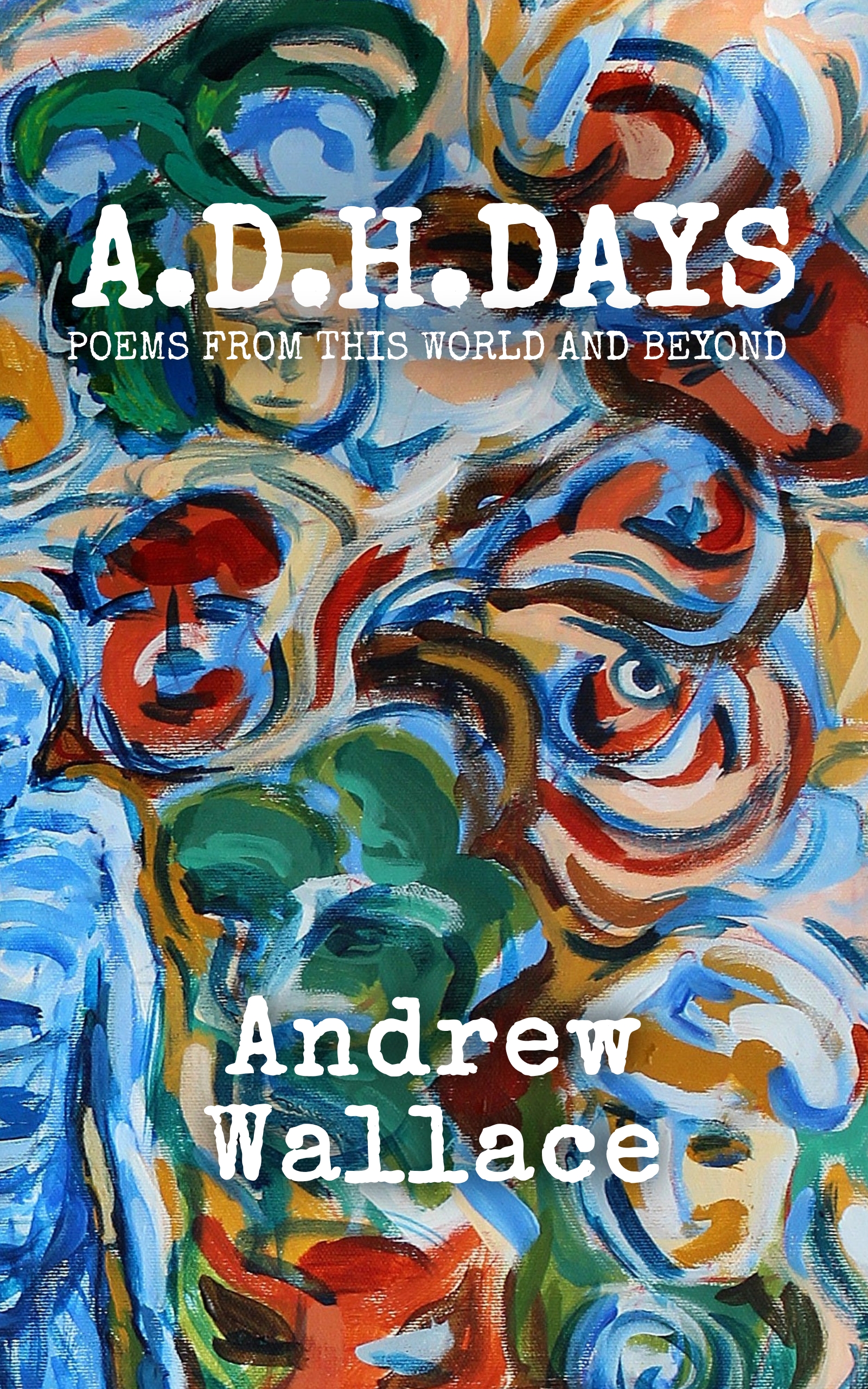
So that is how I got here, and I hope you will find as much inspiration in A.D.H.DAYS as I felt writing it, a process that has taken some four decades.
 Life in Sci-Fi